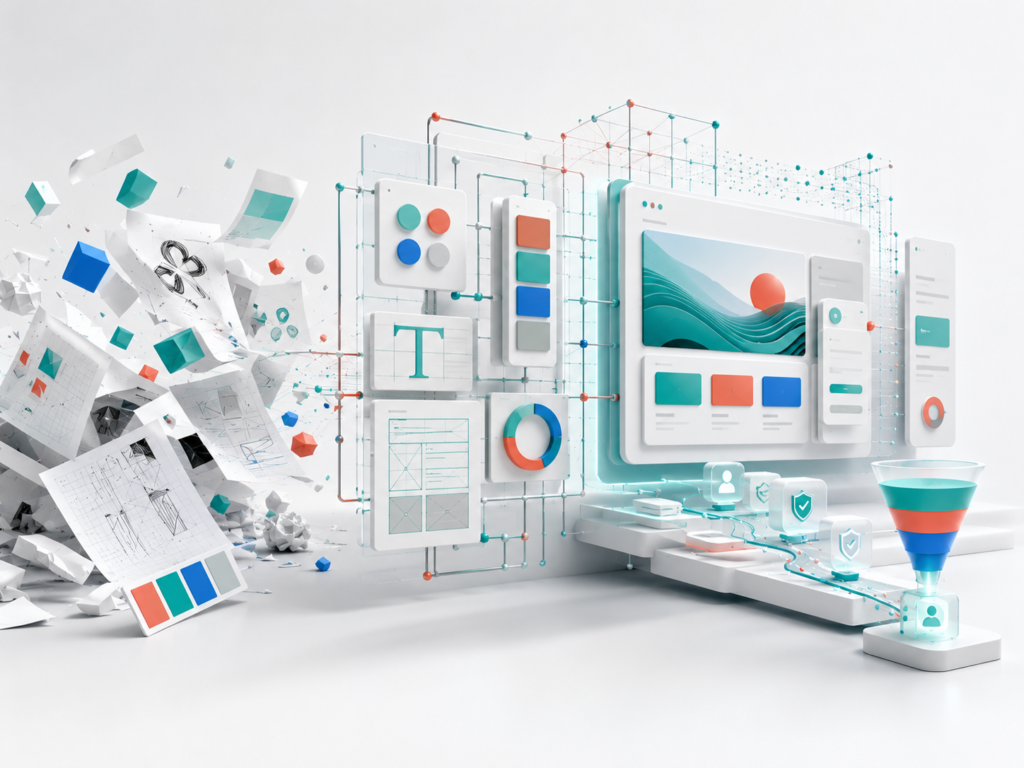

In the high-stakes world of early-stage ventures, your technical foundation is either an accelerator or a handbrake. Customers nowadays use internet search engines to vet a startup’s credibility, and nothing kills a conversion faster than a glitchy interface or a sluggish “Coming Soon” page. For founders, the challenge in 2026 isn’t a lack of tools, it’s the paralysis of choice. Building a product that scales without drowning in technical debt requires a strategic partnership with a web application development company. This guide breaks down the “lean and mean” tech stack necessary to move from a raw idea to a market-ready disruptor.
The “Lean” Architecture: Why It Matters
For a startup, speed to market is the only metric that truly counts. However, speed shouldn’t come at the cost of stability. A professional web application development company focuses on a modular architecture, one where components can be swapped or upgraded as you grow. In 2026, the “monolith” is dead; the future belongs to microservices and headless configurations that allow your brand to remain agile. This architectural foresight is what separates a weekend project from a venture-backed enterprise.
The Frontend: First Impressions are Digital
Your UI is the “handshake” of your business. If the frontend is clunky, users assume the backend is broken. Startups often benefit from frameworks like React or Next.js, which offer the responsiveness today’s users demand. This is where your brand identity design services meet technical execution. A web application development company ensures that your brand’s visual language is translated into a high-performance interface that feels “app-like” even in a standard web browser.
The Backend: The Engine of Innovation
While the frontend wins hearts, the backend wins the market. Choosing between Node.js, Python, or Go depends entirely on your product’s specific logic. This is where a custom software development company provides the most value, building proprietary logic that third-party “no-code” tools simply cannot handle. Whether you are processing complex financial data or managing a real-time marketplace, a custom backend ensures that your intellectual property is secure and scalable.
Database Strategy: Planning for 10x Growth
One of the most common “startup killers” is a database that chokes under load. Your web application development company should help you choose between the structured reliability of SQL and the flexible scaling of NoSQL based on your data types. In 2026, data integrity is a competitive advantage. If your system loses a customer’s record or delays a transaction, you’ve lost their trust forever. Proactive database design is an investment in your brand’s future.
Integration: The Power of the API
No startup is an island. Your stack must talk to CRMs, payment gateways, and marketing automation tools. A custom software development company specializes in creating these secure “handshakes.” By using a “Headless” approach, you can keep your Shopify or WordPress frontend while running your core business logic through a custom-built API. This hybrid model offers the best of both worlds: ease of content management and the power of custom engineering.
Security: The Day Zero Requirement
In 2026, security is not a feature; it is a fundamental right. Startups are frequent targets for data breaches precisely because they often neglect security in the rush to launch. A reputable web application development company builds with a “Security by Design” mindset, implementing encryption, multi-factor authentication, and secure cloud environments from the first line of code. This protects you from the “instant exits” that occur when a security warning pops up on a user’s screen.
The Role of UI/UX in Retention
A tech stack is only as good as the person using it. Even the most powerful backend will fail if the user journey is confusing. Partnering with a UI UX design company during your build ensures that your tech stack serves the user, not the other way around. High retention rates are driven by “frictionless” experiences, where the technology disappears and the value takes center stage.
Common Tech Stack Pitfalls for Founders
Avoid these common errors during your 2026 launch:
-
Over-Engineering: Don’t build for a million users when you have zero. Build for 10,000, but plan for a million.
-
The “No-Code” Dead End: No-code is great for prototypes, but it rarely survives a true scale-up phase.
-
Ignoring Documentation: Ensure your web application development company provides clear documentation so your internal team can take over when the time comes.
FAQs
What is the best language for a startup backend in 2026?
There is no “best,” but Node.js and Python remain favorites for their massive libraries and ease of finding talent.
Can I use WordPress for my startup?
Yes, for the marketing site. However, for core product functionality, a custom software development company build is usually necessary to ensure performance.
How much does a custom tech stack cost?
Costs vary by complexity, but a web application development company can help you prioritize “Must-Haves” for an MVP vs. “Nice-to-Haves” for Version 2.0.
Do I need a custom software development company if I have a CTO?
Often, yes. A CTO provides the vision, while a custom software development company provides the “boots on the ground” to build and test the product at high velocity.
In a Nutshell
Your tech stack is the silent partner in your startup’s success. By choosing a modern, modular, and secure foundation, you give your brand the agility to pivot and the strength to scale. Whether you are building a disruptive new app or seeking digital transformation solutions for an existing business, the right engineering partner is your greatest asset. At Scopun, we specialize in helping startups navigate the “Day Zero” challenges and build technical foundations that last. Let’s build the future of your brand together.
Connect with Scopun now.