
For high-ticket B2B enterprises, user experience has traditionally been static. Whether a user is a procurement officer executing a six-figure component re-order, an engineer checking technical tolerances, or a CFO reviewing quarterly expenditure, they are typically forced to navigate the exact same digital interface.
This rigid layout creates immediate operational friction. The engineer has to click through invoicing tabs they do not need, while the procurement officer is forced to filter through complex technical drawings to find a simple re-order button.
In a commercial landscape where speed and efficiency dictate vendor loyalty, forcing diverse user personas into a one-size-fits-all framework is an expensive oversight.
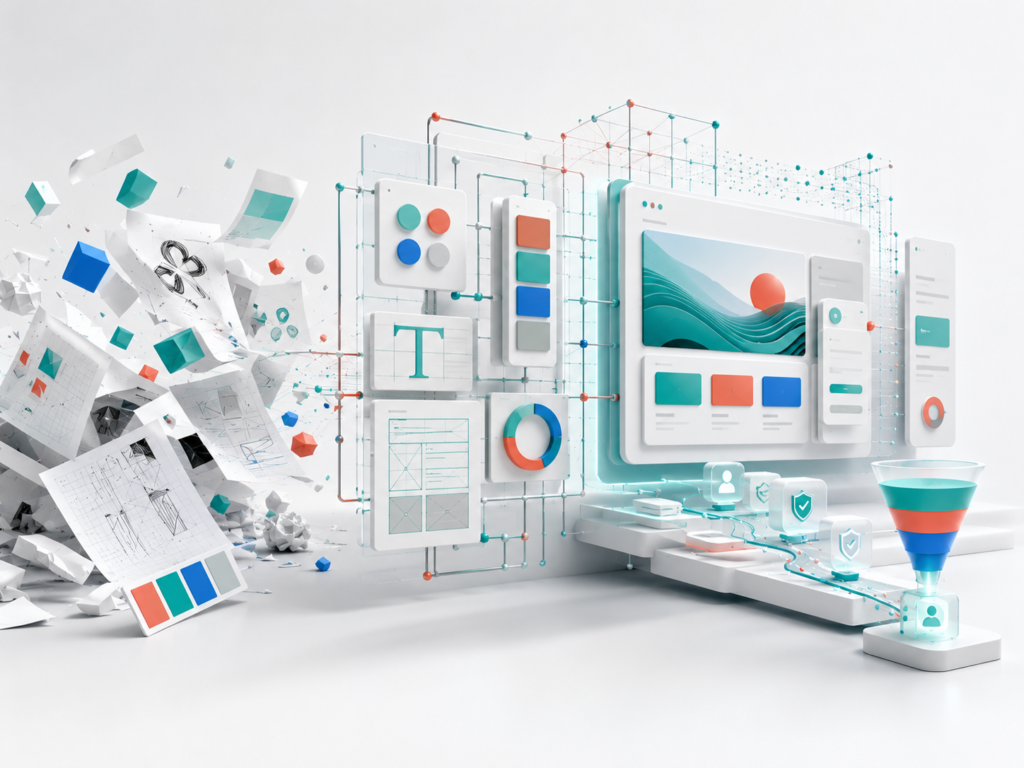
The solution emerging in high-end enterprise architecture is Generative UI. By leveraging advanced front-end development and contextual data filtering, modern Custom Web Development Solutions no longer rely on fixed templates. Instead, the interface dynamically constructs itself in real-time, adapting its layout, data visualization, and action items to match the exact profile and immediate intent of the individual user logging in.
The Interface Evolution: Static vs. Generative
| Component | Traditional Static Portals | Dynamic Generative UI Portals |
| User Layout | Identical for every user, leading to menu clutter. | Morphs in real-time based on the user’s operational role. |
| Data Display | Static charts requiring manual filtering and exporting. | Automatically renders relevant visualizations (e.g., predictive stock alerts). |
| Conversion Path | Rigid multi-step forms regardless of client history. | Displays immediate, tailored action panels (e.g., instant one-click re-ordering). |
| System Agility | Code changes require complete front-end redeployments. | Modular interface components assemble on the fly. |
3 Ways Generative UI Protects High-Value B2B Accounts
1. Eliminating Cognitive Friction for Procurement Teams
Large-scale corporate buyers do not visit a portal to browse; they visit to execute a specific task. If your interface requires them to dig through legacy menus to find order histories or custom pricing agreements, you are introducing friction into the relationship. A custom-built generative frontend recognizes a procurement login instantly, rendering a streamlined dashboard focused purely on contract renewals, shipping statuses, and pending approvals.
-
The Commercial Impact: By eliminating unnecessary navigation steps, you reduce the time to complete an order, transforming your digital portal into the easiest, most efficient channel in your client’s vendor network.
2. Role-Specific Data Hydration
An operations director needs to see bulk supply chain volumes; a technician needs to see individual batch testing metrics. Instead of building separate, disconnected applications for different departments, Enterprise Software Development utilizes generative design principles to feed a single database into a flexible frontend. The application reads the user’s security token and structural demands, automatically displaying data in the exact format required—whether that is a high-level timeline chart or an granular technical ledger.
-
The Commercial Impact: Your internal and external teams gain a unified “Single Source of Truth,” eliminating cross-department miscommunication while maintaining strict data access control.
3. Adaptive Request-for-Quote (RFQ) Workflows
In standard web systems, an RFQ form is a long, daunting list of fields designed to capture every possible variable. Generative UI replaces this with adaptive forms that change configuration based on every response entered. If a client selects a specific product category, the system instantly generates the precise technical parameter fields required for that specific item, hiding everything else.
-
The Commercial Impact: Simplifying complex technical inquiries increases submission rates from tier-one clients, allowing your engineering teams to receive perfectly structured project parameters without endless back-and-forth communication.
The Engineering Prerequisite: Clean Architecture
Deploying an adaptive interface requires a total departure from standard, template-driven website builds.
-
The Monolithic Barrier: Traditional content management setups cannot handle generative UI because their frontend design is permanently hardcoded to their backend database. If you try to force dynamic rendering onto a rigid template, system speed plummets.
-
The Headless Solution: A professional Website Development Company deploys a decoupled, or “headless,” system architecture. The frontend interface operates as an agile, independent layer that queries your backend systems via highly optimized APIs. This ensures that even as the system dynamically builds custom components on the screen, pages load instantaneously.
Frequently Asked Questions
Does a dynamic interface complicate accessibility or usability training?
On the contrary, it simplifies it. Because the interface actively hides components that are irrelevant to the user’s active role, it reduces screen clutter. Users only see what they are trained to use, drastically lowering onboarding times and reducing user error across the board.
Is custom generative architecture secure enough for sensitive corporate sectors?
Yes. Because the user interface is completely decoupled from your database, public users never have direct exposure to your backend servers. Every custom component rendered on screen is validated via secure, encrypted API tokens, making it heavily insulated against data leaks.
Can this style of dynamic frontend interface connect to our existing ERP system?
Absolutely. By leveraging custom middleware, we can build a modern, generative front-end interface that extracts data from your existing SAP, Sage, or proprietary legacy databases, modernizing your client-facing operations without disrupting your core infrastructure.
The Interface is the Product
In the modern enterprise market, your digital interface is often the primary touchpoint your clients interact with on a daily basis. If your portal feels outdated, rigid, or frustrating to navigate, it signals a broader lack of operational agility.
Generative UI shifts the paradigm from requiring users to understand your system, to engineering a system that understands your user. By investing in highly personalized, adaptive web environments, your business establishes an elite digital infrastructure that secures high-ticket accounts, automates complex workflows, and sets a standard your competitors cannot replicate.
Innovate Your Digital Interfaces with Scopun
At Scopun, we engineer sophisticated Digital Transformation Solutions that break the mold of static corporate software. Our teams specialize in combining elite UI UX Design Agency methodologies with robust web development to build adaptive customer portals that drive measurable commercial efficiency. Turn your digital interface into a major competitive advantage.
Consult with Scopun on Advanced Portal Architecture.
Connect now.