
Strategy & Audits
We start with what you already have: your goals, customers, website, competitors and any campaigns that are running. You get a written plan that says which channels to use first, what to measure and what to leave alone for now.
Digital marketing services cover the work that brings the right people to your website and turns them into enquiries or sales: search, paid ads, social, content, email and the tracking that ties it all together. At Scopun we run that work for UK businesses from the same studio that designs and builds websites, and that matters more than it sounds. When an advert sends people to a slow or confusing page, many agencies can only raise a ticket with your developer and wait. We can fix the page ourselves.
We work across marketing strategy and audits, Google Ads and PPC management, social media advertising on Meta and LinkedIn, content and email marketing, conversion rate optimisation and analytics. SEO is part of the mix too, and we cover it in depth on our SEO services page. We will not push every channel at once. Paid ads stop the day the spend stops, while SEO and good content keep working and build over time. If your budget is small, we will usually suggest starting with one channel, proving it, and adding the next only when the results justify it.
Every engagement starts with a free 30-minute consultation on Google Meet. You then get a written proposal with the scope set out in plain English: a fixed price for one-off work such as an audit, tracking setup or campaign build, or a monthly plan for ongoing management. We do not promise rankings, leads or a return on ad spend, because nobody honestly can. We do promise accurate tracking, straight reporting and a UK team that replies within one business day.
One team
marketing and website together
Since 2014
UK web and software studio
4.6★
Rated on Trustpilot
UK
GMT/BST team
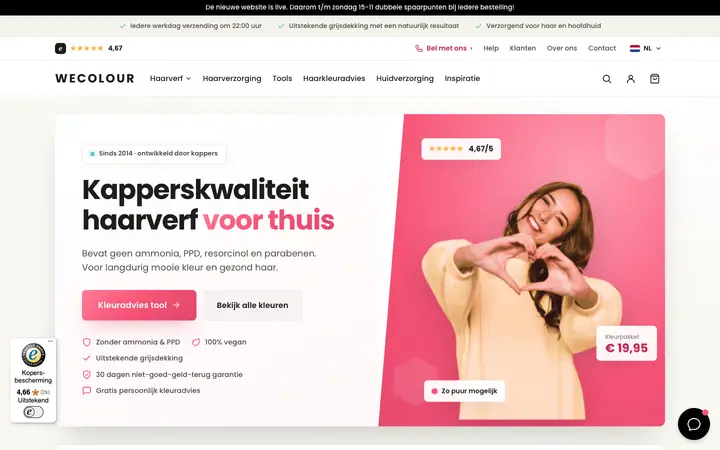
WECOLOUR
Hair colour eCommerce · UI/UX design, eCommerce development
Digital marketing services are the paid and unpaid ways a business gets found and chosen online: search engine optimisation, pay-per-click advertising on Google, ads on social platforms, content, email, and the work on your website that turns visitors into enquiries. Good digital marketing is not a long list of channels. It is a plan that picks the few your customers actually use and measures what each one brings in.
For most businesses the website is where every channel ends up, so it decides whether the marketing pays. That is why we offer digital marketing alongside web development and UI/UX design. We can see the whole route, from the search or the advert to the form or the checkout, and fix the weak point wherever it sits.
Our digital marketing services include:
We start with what you already have: your goals, customers, website, competitors and any campaigns that are running. You get a written plan that says which channels to use first, what to measure and what to leave alone for now.
We build and manage Search, Performance Max and Shopping campaigns, with careful keyword research, negative keyword lists, ad copy written for your customers and conversion tracking that Google can learn from. Budget moves towards the searches that bring enquiries.
We run ads on Meta (Facebook and Instagram) and LinkedIn, with audiences, creative and landing pages planned together. Meta tends to suit consumer brands and local services; LinkedIn suits B2B firms selling to a specific job title or industry.
We plan and write blog content, guides and landing pages around the questions your customers ask, and set up email campaigns and automations, from a welcome series to abandoned basket reminders, so people you have already reached hear from you again.
Because we design and build websites, we can change the page, not just suggest it. We find where people drop out, then improve headings, forms, calls to action and page speed. Campaign landing pages are designed and built in-house.
We set up GA4, Google Tag Manager and Consent Mode properly, check that every form, call and sale is recorded, and send a monthly report in plain English: what happened, why we think it happened and what we will do next.
Many marketing agencies cannot touch your site, so fixes wait in a queue between them and your developer. We design and build websites, so a slow page, a broken form or a weak landing page gets fixed by the team that spotted it.
We will tell you which channels are not worth it for you yet. Ads stop when the spend stops, SEO and content take longer but keep working, and a small budget spread across five channels rarely does any of them justice.
Before any campaign spends money, we test that enquiries, calls and sales are actually being recorded. If the numbers are wrong, every decision built on them is wrong too.
One-off work such as an audit or tracking setup has a fixed price agreed in writing. Ongoing management runs on a monthly plan with a set scope, which you can stop on the terms in your plan.
Nobody can guarantee rankings, leads or a set return on ad spend, so we do not. We agree goals and measures with you at the start and report against them honestly, in good months and bad.
We are a UK studio working on GMT/BST. You deal with the same people every month, we reply within one business day, and reports are written for people who do not live in ad dashboards.
Free consultation
Book a free 30-minute call. We'll map out next steps and send a fixed-price proposal within a few days.
Not ready to talk yet? Get a free written website audit
We work on the platforms your customers already use and measure them with standard, well-supported tools. Tracking is set up with consent in mind, to meet UK GDPR and the PECR cookie rules.
Search ads
Paid social
Analytics & tracking
Research
Content & email
Landing pages & CRO
The cost of digital marketing depends on the channels involved, how much content and creative is needed, and whether the work is a one-off project or ongoing management. One-off work is agreed as a fixed price in writing, and ongoing work runs on a monthly plan with a set scope. Your advertising budget is separate, and we agree it with you before any campaign goes live.
Work we quote for
Each one is priced on its own scope, with a fixed quote agreed in writing before work starts.
Get a free quoteWhat affects the cost
Number of channels
One channel run well, or several at once. Each channel adds its own setup, creative and reporting work.
Starting point
Whether your tracking, ad accounts and landing pages already work, or need fixing or building before campaigns can run.
Content and creative
How much ad copy, imagery, video, blog content and email we write or produce for you each month.
Landing pages and site changes
Whether campaigns need new landing pages or changes to your website, which we design and build ourselves.
Size of the account
How many products, services, locations or audiences need their own campaigns, and how much ad spend is being managed.
Reporting and contact
A monthly plain-English report as standard, or more frequent reviews, dashboards and calls with your team.
Every project starts with a free consultation. You then receive a written, fixed-scope proposal that sets out the deliverables, timeline and cost before any work begins, so there are no day rates or surprise invoices. With Scopun you also get a full team of designers, developers, a project manager and QA, rather than a single freelancer with no cover for holidays, illness or overload.
Setup work has a clear end date. Results take longer: paid ads can bring visitors as soon as they go live but usually need a few weeks of data to settle, while SEO and content build over months. Typical timings for the setup work:
2 to 3 weeks
Audit & written strategy
1 to 2 weeks
Tracking & analytics setup
2 to 4 weeks
Ad campaign setup
2 to 4 weeks
Landing page design & build
Your proposal lists the full timeline before we begin. We track each project with clear steps, weekly check-ins, and a shared plan, so you always see the latest progress.
Every Scopun project follows the same seven steps, so you always know what comes next.
A free 30-minute call to understand your business, customers and goals, and to check honestly whether digital marketing will pay for you right now.
We review your channels, tracking and website, then send a written plan with goals, channels, scope and cost, as a fixed price or a monthly plan.
We plan the campaigns and design the landing pages they lead to: audiences, keywords, ad copy, creative and page layouts, all shared with you for approval.
We build the ad accounts, campaigns, email automations and landing pages, and make any changes to your website that the plan needs.
Every form, call, booking and sale is tracked and tested by hand, and Consent Mode is checked, before any campaign spends money.
Campaigns go live on agreed budgets, and we watch search terms, spend and early results closely in the first few weeks.
Each month we adjust campaigns, publish content, test changes on the site and send a plain-English report with what comes next.
Paid ads (Google Ads, Meta and LinkedIn) put you in front of people quickly and are easy to measure, but you pay for every click, and the traffic stops the day the budget stops.
SEO and content take longer to build, often months, but the pages keep bringing visitors without a cost per click, and they keep working after the effort slows down.
Many businesses use some of both: ads to test which messages and offers work while SEO and content grow underneath. If your budget only covers one, we will help you choose based on how soon you need enquiries and how long you can wait for them.
Explained in depth
Pick a topic to read it. Each one takes a minute or two.
Digital marketing services are the work of getting the right people to your website and persuading them to get in touch or buy. That covers search engine optimisation, paid search on Google, paid social on Facebook, Instagram and LinkedIn, content, email, and the changes to your site that turn more visitors into customers. Underneath it all sits tracking, because without it you cannot tell which of those things is paying for itself.
The list of channels is the easy part. The hard part is choosing. A local plumber, a B2B manufacturer and an online skincare brand need very different mixes, and most businesses only need two or three channels done properly. A good digital marketing agency should be able to explain why each channel is in your plan, what it is expected to do and how you will know if it is working. If they cannot, the plan is a menu, not a strategy.
At Scopun we treat the website as the centre of the plan, because almost every channel ends there. An advert, a social post and a newsletter all send people to a page. If that page is slow, vague or awkward on a phone, the channel looks like it failed when the real problem was the page it landed on. We look at the channel and the page together, and we can change both.
A marketing audit shows what is working now, what is wasting money and where the quickest improvements are, before you spend more. We look at your goals, who your customers are, how they search and buy, which channels you already use and what your competitors are doing. We also check the basics that audits often skip: whether your tracking records enquiries correctly, whether your landing pages load quickly on a phone and whether the page matches the promise in the advert.
The result is a written plan in plain English, not a slide deck full of jargon. It sets out the goals we agree with you, the channels to start with and why, what to fix on the website first, what to measure, and a realistic view of what each channel can and cannot do in the first few months. It also lists what we suggest you leave alone for now, which is often the most useful part of the whole document.
You can take the plan and run it yourself, hand it to your own team or ask us to deliver it. The audit and strategy are a fixed-price piece of work, so you are not tied into anything to get them. If you would like a quick self-check before we speak, our website audit checklist covers the site side of things and shows the kind of problems we look for first.
SEO is the channel that keeps bringing visitors without a cost per click, which is why it belongs in most long-term plans. It is also slow. Technical fixes can go live within weeks, but rankings for competitive terms usually take many months to build, and nobody can promise where you will end up. That makes SEO a poor fit if you need enquiries next month, and a strong one if you are planning for next year and beyond.
We cover search engine optimisation on its own page, because it needs more than a paragraph. In a digital marketing plan it is one channel among several, and it often works well alongside paid search. Ads show you quickly which search terms bring enquiries, and SEO can then build pages to win those terms without paying for every click. If you are an industrial business, our guide to SEO for manufacturing companies covers that sector in detail.
Because we build websites, we can also fix the SEO problems that sit in the code: slow templates, missing structured data, messy URLs or a site structure that buries your most important pages. Many marketing agencies can only list those issues in a report and hope someone else picks them up. We can change them ourselves, which removes the back and forth with a separate developer and means the fix gets made the way the audit intended.
Google Ads puts your business in front of people at the moment they search for what you sell. That makes it one of the quickest ways to get relevant traffic. Search campaigns show text ads on the results page for the keywords you choose. Shopping campaigns show your products with an image and a price, using a product feed from Google Merchant Center. Performance Max uses Google's automation to place ads across Search, Shopping, YouTube, Display, Gmail and Maps from a single campaign.
Each type has its place. Search gives you the most control and is usually where we start for service businesses. Shopping suits online stores with a clean product feed. Performance Max can work well once conversion tracking is accurate and there is enough data for it to learn from, but it shows you less about where the money went. So we set it up carefully, feed it good signals and keep a close eye on the search terms and placements it reports.
Good Google Ads management is mostly patient, unglamorous work: reviewing search terms, moving budget towards what brings enquiries, pausing what does not, testing new ad copy and keeping landing pages in step with the ads. It is also honest about one thing. The day you stop paying, the traffic stops. Paid search is a tap, not a reservoir, so it pairs well with channels such as SEO and email that keep working on their own.
A lot of wasted ad spend comes from showing up for the wrong searches, so keyword research is where PPC management starts. We look for the terms people use when they are ready to buy or enquire, not just the ones with the most searches. 'Emergency plumber near me' and 'how to fix a dripping tap' share a subject, but only one of them is likely to turn into a booked job, and you pay the same for a click on either.
Negative keywords are the other half of the job. They tell Google which searches you do not want to pay for: jobs, free, DIY, training courses, competitor names or products you do not sell. We build a negative keyword list before launch and keep adding to it as real search terms come in. On an account that has been running without one for a while, this is often where the quickest savings are found.
Then there is the ad itself. Good ad copy is specific: what you offer, who it is for, why someone should pick you and what happens when they click. We write ads that match the landing page they lead to, so the promise in the ad is the first thing people see when they arrive. When the two do not match, people leave straight away, and you have still paid for the click that brought them.
Social media advertising reaches people based on who they are and what interests them, rather than what they are searching for right now. That makes it good for creating demand, showing a product to people who did not know it existed, and for reminding past visitors to come back. It is usually less suited to catching urgent need, which is where search ads tend to do better, so we are careful about which job we give it.
Meta (Facebook and Instagram) suits consumer brands, local services, events and online stores, where strong images or short videos can stop someone scrolling. LinkedIn usually costs more per click, but it lets you target by job title, industry and company size, which makes it worth considering for B2B firms with a high-value sale and a clearly defined buyer. For many small businesses, one of the two is plenty to begin with.
Paid social lives or dies on its creative and on the page it leads to. We plan audiences, ad formats, copy and landing pages together, and we set up the Meta pixel and Conversions API or the LinkedIn Insight Tag properly, with consent, so the platforms can see which ads lead to enquiries or sales. Without that, you are judging campaigns on likes and clicks, which tell you very little about whether they are paying their way.
Content marketing means publishing useful material that answers the questions your customers ask before they buy. That might be articles, guides, case studies or landing pages. Done well, it helps you rank in search, gives your sales team something worth sending, and gives people a reason to trust you before they get in touch. Done badly, it is a blog full of generic posts that nobody reads and nobody links to.
We start from real questions: what customers ask on calls, what they search for, what your competitors cover and what they miss. Each piece has a job, whether that is ranking for a search term, supporting an ad campaign or answering an objection that keeps coming up in sales. We write in plain English and in your voice, and we would rather publish one useful article a month than four thin ones.
Content is slow to pay back, like SEO, and it builds up in the same way. An article that answers a common question well can keep bringing visitors long after it is published. It works when the website makes the next step obvious, so every piece we write links to a relevant service, a case study or a clear way to get in touch. Our article on why your website is never finished explains why we treat this as ongoing work rather than a one-off.
Email is often the most overlooked channel a business already owns. It reaches people who have bought from you before or asked to hear from you. There is no cost per click and no platform deciding who gets to see it. For many businesses a well-run list is a steady source of repeat sales and referrals, yet it is often left to an occasional newsletter that goes out when someone remembers.
We set up campaigns and automations that run in the background. A welcome series for new subscribers. Abandoned basket reminders for online stores. Follow-ups after an enquiry or a quote. Review requests after a job is finished. Gentle re-engagement emails for customers who have gone quiet. Each one is written to be useful rather than pushy, and timed so that it arrives when it is actually relevant to the person reading it.
Email also has rules. In the UK, marketing emails have to follow UK GDPR and PECR, which set out when you need consent, and every message needs a clear way to unsubscribe. We build sign-up forms and lists that respect those rules, connect them to your website or shop, and track what each email leads to, so you can see which messages bring in orders and enquiries and which ones simply get opened.
Conversion rate optimisation, or CRO, is the work of getting more of your existing visitors to enquire, book or buy. It is often how you can grow sales without increasing ad spend: the traffic is already arriving, and the page is what lets it down. When more of the people who already visit complete your form, every channel you pay for gives you better value at the same time, without a single extra click.
This is where Scopun differs from many marketing agencies. We design and build websites, so we do not stop at a list of recommendations. We find where people drop out using analytics, heatmaps and session recordings, then make the changes ourselves: clearer headings, a stronger offer, shorter forms, faster pages, better mobile layouts and calls to action that are easy to find. Where there is enough traffic, we A/B test changes rather than guess.
Landing pages get the same treatment. A page built for one campaign, with one message and one action, tends to do better than sending ad traffic to your homepage. We design and build them in-house, on your existing platform or as standalone pages. When we redesigned the Metallic Elephant website, for example, we put a 'Book a test drive' button in the header so visitors can book from any page. That is the kind of change a marketing report can suggest but only a build team can ship.
Every marketing decision rests on tracking, and broken tracking is surprisingly common. Forms that record nothing, phone calls that are never counted, sales counted twice, or conversions lost because the cookie banner was set up wrongly. If the numbers are wrong, Google Ads and Meta optimise towards the wrong things, and you can end up cutting the campaigns that were actually working while keeping the ones that were not.
We set up Google Analytics 4 and Google Tag Manager properly, define the actions that matter to your business as key events, and connect them to Google Ads and your social ad accounts. We configure Consent Mode so tracking respects each visitor's cookie choice under UK GDPR and PECR, while still giving the ad platforms the signals they are allowed to use. Then we test every conversion by hand before any campaign spends money.
Reporting comes once a month, in plain English. You get what happened, what we think caused it, what we changed and what we plan to do next, with the numbers that relate to your goals rather than a pile of charts. If you want to understand which numbers deserve your attention and which can safely be ignored, our guide to website metrics is a good place to start.
Campaigns often stall because of a gap between the people running the marketing and the people who can change the website. The agency spots a slow landing page or a broken form, raises it with your developer, and the fix waits in a queue. Meanwhile the budget keeps flowing to a page that does not convert, and both sides can fairly say it was not their job.
We close that gap by doing both. Scopun is a UK web and software studio that has designed and built WordPress sites, Shopify stores, Magento stores and custom platforms since 2014, and the people planning your campaigns work alongside the people who build pages. When a test points to a better headline, a shorter form or a faster template, we make the change. When a campaign needs a new landing page, we design and build it.
It also means one team is accountable for the whole route, from the search or the advert to the enquiry. If results dip, there is no finger-pointing between an agency and a developer, just one team looking at the full picture and fixing what needs fixing. If we already look after your website, it removes the hand-off altogether, because the team running your marketing already knows how the site is built.
If your budget is limited, the most useful thing you can do is pick one channel and do it properly. Spreading a small budget across Google Ads, Meta, LinkedIn, SEO and email means none of them gets enough money or attention to work, and you learn very little, because each channel's results are too small to read. One channel, run well and measured properly, tells you far more.
Which channel depends on how your customers buy. If people search for what you do, such as a local service or a specific product, Google Ads or local SEO is usually the place to start. If they do not yet know they need you, paid social can create that demand. If you already have a customer list, email may bring the quickest return of all. We will recommend one, explain why, and suggest when to add the next.
Before any of that, make sure the website can turn visitors into enquiries, because paid traffic sent to a weak page is money lost. Many small businesses struggle with digital growth for exactly this reason: the marketing is fine, but the site is not ready for it. Fixing that first is rarely the exciting option, but it makes everything that comes after it cheaper and easier to measure.
Sometimes the honest answer is to wait, or to spend the money somewhere else first. Paid campaigns are hard to justify if your website is slow, unclear or broken on mobile, because you will pay for clicks that leave. They are also hard to justify if you cannot take on more work, if the margin on each sale is too small to cover the cost of winning it, or if nobody is free to answer the enquiries that come in.
It is also worth pausing if you cannot yet measure results. Without working tracking there is no way to tell good spend from bad, and every decision turns into guesswork. In that case we would suggest fixing the tracking and the key pages first, as a short, fixed-price piece of work, and only then starting campaigns. It is not the most exciting start, but it protects the budget you spend afterwards.
We would rather tell you this on a free call than take a monthly fee for campaigns that cannot work yet. If the problem is the website, we can quote for fixing it. If the problem is something else, such as capacity, margins or the offer itself, we will say so plainly, even if that means there is nothing for us to do for you right now.
We work in two ways: a fixed price for one-off work, or a monthly plan for ongoing management, agreed in writing before work starts. One-off work includes a marketing audit and strategy, tracking and analytics setup, building a new Google Ads or paid social account, or designing and building landing pages. Ongoing work covers running campaigns, writing content, sending emails, testing changes on the site and reporting each month.
What drives the cost is the number of channels, how much content and creative is needed, how much has to be fixed before campaigns can run and the size of the account. Your advertising budget is separate from our work, and we agree it with you before any campaign goes live. We recommend that your ad accounts are set up in your own name, so the history and data stay with you whoever runs them.
Monthly plans can be stopped with notice, on the terms in your plan, so you are not locked into work that is not paying its way. Every month you get a plain-English report and a short list of what comes next. To see how an engagement runs from the first call onwards, read how it works, or book a free consultation and we will talk through your goals and where to start.
Whatever your plan needs from this list: a marketing audit and written strategy, SEO, Google Ads and PPC management, social media advertising on Meta and LinkedIn, content and email marketing, landing pages and conversion rate optimisation, and GA4 tracking with monthly reports. We agree the exact scope in writing, and we do not add channels you do not need.
It depends on the number of channels, how much content and creative is needed each month, whether your tracking and landing pages need work first, and the size of the account. One-off work such as an audit or campaign setup gets a fixed price, and ongoing management gets a monthly plan, both agreed in writing after a free consultation and before work starts. Your ad budget is separate.
Paid ads can bring visitors as soon as they go live, though campaigns usually need a few weeks of data before they settle. SEO and content take longer, often several months, but keep working once they are established. Setup work such as an audit or tracking typically takes 1 to 3 weeks, and your plan sets realistic expectations for each channel.
It can be, if it is focused. Digital marketing for small business works when you pick one channel your customers really use, make sure the website turns visitors into enquiries and track the results. Spreading a small budget across many channels rarely works. If your website is not ready, we will say so and suggest fixing that first, because paid traffic sent to a weak page is wasted.
Yes. Google Ads management can run as its own monthly plan, or we can set up an account once for a fixed price and hand it to your team. PPC management covers keyword research, negative keywords, ad copy, bidding, budget changes, landing page checks and conversion tracking. If your landing pages are holding the ads back, we can design and build better ones.
Not always. Many sites only need a few changes: faster pages, a clearer offer, a shorter form or proper tracking. We check this in the audit. We work on WordPress, Shopify, WooCommerce, Magento and custom sites, or alongside your current developer. If the site is holding the marketing back, we can fix or rebuild it ourselves rather than sending you to another company.
No. Nobody can honestly guarantee rankings, leads or a set return on ad spend, because search engines, ad auctions and your market are outside anyone's control. What we commit to is a clear plan, accurate tracking, honest monthly reporting and steady work on the things most likely to improve your results.
Monthly plans can be stopped with notice, on the terms in your plan, which are set out in writing before you start. We recommend that your ad accounts, analytics and tag manager are set up in your own name, so the history and data stay with you whoever runs them.
Case studies
Real client websites we have redesigned, shown as they were and as they are now.
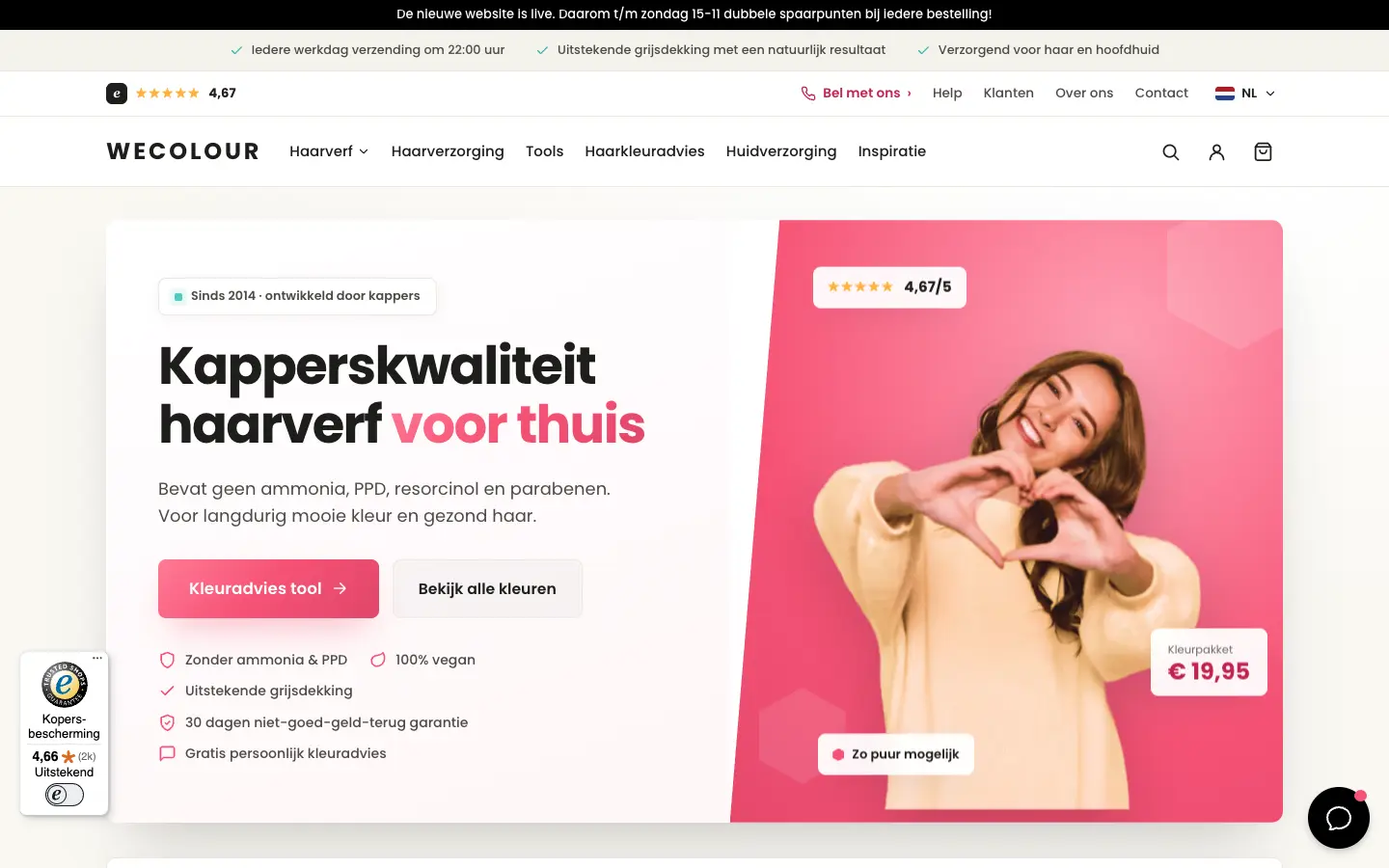
Hair colour eCommerce
WECOLOUR
A full UI/UX redesign for a Dutch hair colour webshop
See before & after
WordPress · Online magazine / publishing
The Coolector
A magazine-style redesign for a men’s lifestyle publication on WordPress
See before & after
Shopify · Home fragrance & wellbeing eCommerce
Juniper & Hare
From a basic GoDaddy shop to a Shopify store with real character
See before & afterTell us about your project. Free consultation, and we reply within one business day.
Digital marketing pays when the plan, the channels and the website pull in the same direction. At Scopun, one UK team runs your ads, content, email and tracking, and can change the website when the numbers say it should.
Whether you want a one-off audit, help putting tracking right or someone to run your campaigns each month, book a free 30-minute consultation and we will give you a straight answer on where to start.